Addy / Aditya SinghBased in India

Aditya “Addy” SinghSoftware builder

I build software for the moments after the first answer.

Operational systems, AI products, and developer tools, designed for what happens after the first attempt: the failed run, the handoff, the claim that still needs checking.

01 / Selected work

One large delivery, and three builds of my own.

Independent builds
02 · Learning product · Solo build

PebbleCode

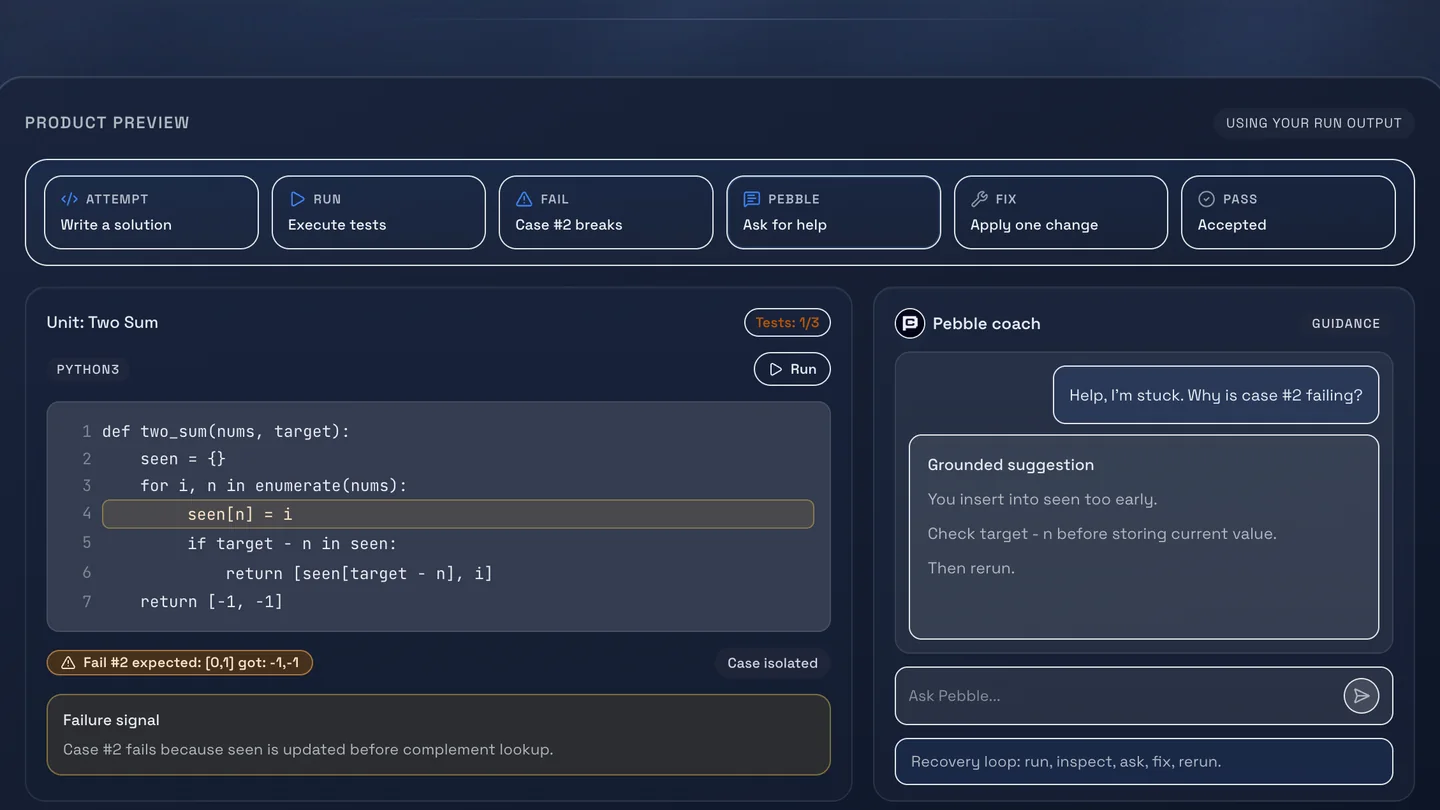
Coding practice organized around the moment a learner gets stuck: run, inspect, get a hint, and try again.

DecisionI chose to keep the attempt visible while asking for help.

PebbleCode product preview: a Two Sum attempt fails test case 2, the failing line is highlighted, and Pebble coach suggests checking the complement before storing the value
Animated product preview on the PebbleCode homepage
03 · Developer tool · Solo build

Tuku

A CLI and daemon that keep task state, checkpoints, handoffs, and evidence together across coding-agent work.

DecisionI kept advisory risk signals separate from hard policy.

$ tuku start --goal "Implement bounded feature" --repo .$ tuku checkpoint --task <TASK_ID> --human$ tuku continue --task <TASK_ID> --human$ tuku inspect --task <TASK_ID> --human
Command flow from the public README
04 · AI reliability experiment · Solo build

Epistemic Audit Engine

A claim-level audit service that separates supported, refuted, and unresolved statements in generated text.

DecisionThe risk aggregator guards against a misleading low-risk result on a small sample: refuted claims remain high risk, while unresolved small samples stay at least moderate in the implementation.

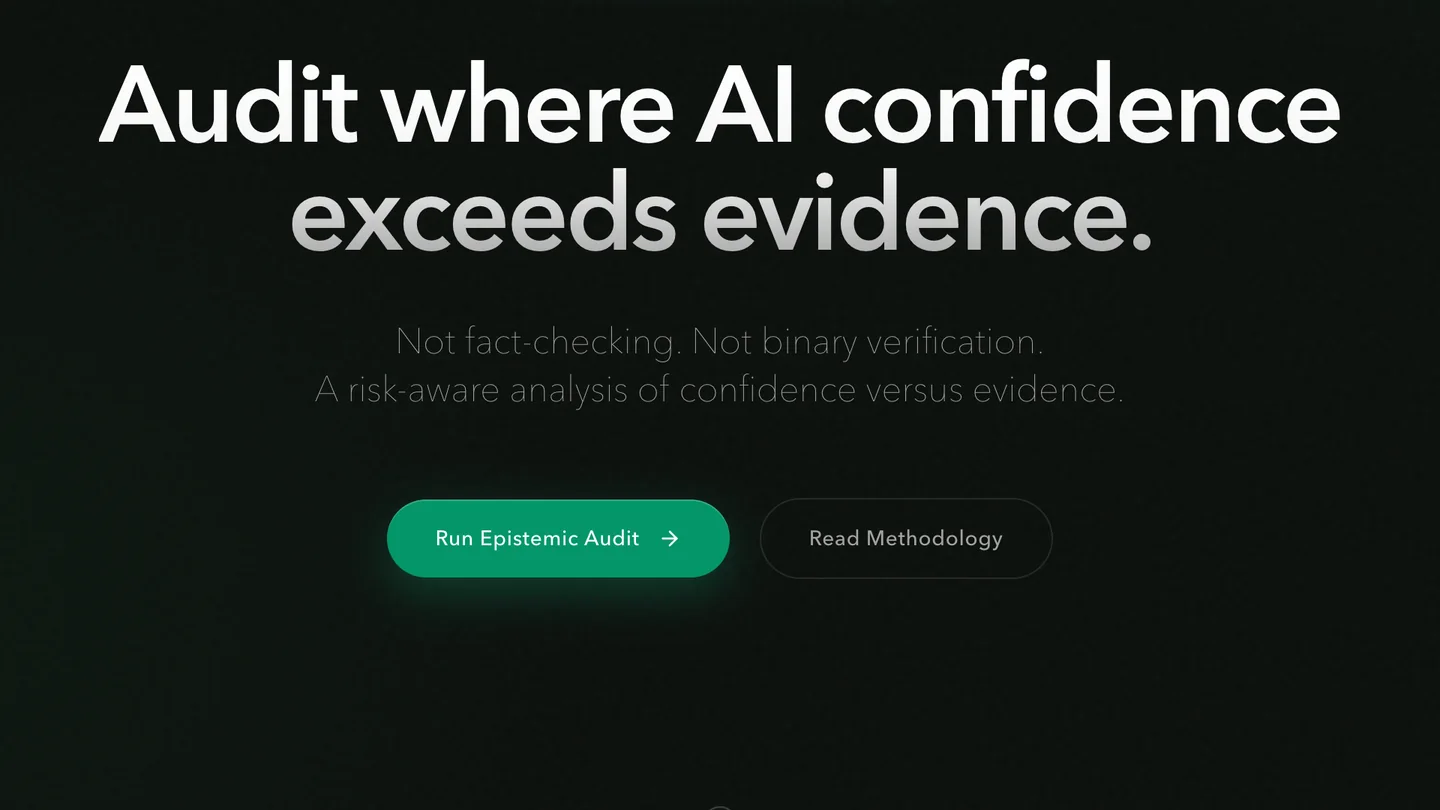
Epistemic Audit Engine homepage: Audit where AI confidence exceeds evidence, with Run Epistemic Audit and Read Methodology buttons
Homepage of the deployed interface
Smaller experiment · Local multi-service prototype

FairHire AI

A resume-analysis workflow that queues long-running work outside the request path, with local monitoring services.

Source
Smaller experiment · Repository experiment

DealLens AI

An asynchronous document-analysis backend for exploring financial-deal screening workflows.

Source
02 / Experience

Where I’m learning and working.

Sep 2026 to present

American Express

Apprentice, Credit and Fraud Risk

A new apprenticeship in Credit and Fraud Risk, learning and contributing to data, product, and workflow problems.

I started in September 2026 and am early in the role. Internal systems, projects, and outcomes are confidential, so none are described here.

  • Data
  • Product operations
  • Workflows
Class of 2026
KIIT · B.Tech, Computer Science & Systems Engineering
2022
Modern School, Barakhamba Road · School education, New Delhi
03 / About

Curiosity with a useful outcome.

I’ve always liked that a small group can build something on the internet and put it in people’s hands. I usually start with the awkward part of a workflow: unclear intent, a failed run, or an answer that needs checking. Then I build a way forward that a person can understand and use.

Outside the apprenticeship, I keep making small products and studying what makes them dependable. There’s a more personal side over here, including an old flute photograph.

  1. Habit 01

    Keep the failed attempt visible.

    It often carries the context needed for the next useful hint.

  2. Habit 02

    Ask who owns task state.

    A worker transcript should help inspect a handoff, not become its only record.

  3. Habit 03

    Show the uncertain claim.

    A risk label is easier to trust when the evidence and its limits are visible.

04 / Notebook

Notes from the build.

All notes
05 / Contact

Have a useful problem in mind?

I’m interested in product engineering, AI systems, developer tools, and collaborators who care about how software behaves when things go wrong.

Writebuild@addyvantage.me

Best for a brief, links, or anything that needs detail. Tell me what you’re building and where it gets stuck.

TalkBook a 30-minute conversation

A video call on Cal.com, weekdays between 9 AM and 5 PM India time. You’ll be asked for a line of context so the time is useful.