Research prototype · 2026
Epistemic Audit Engine
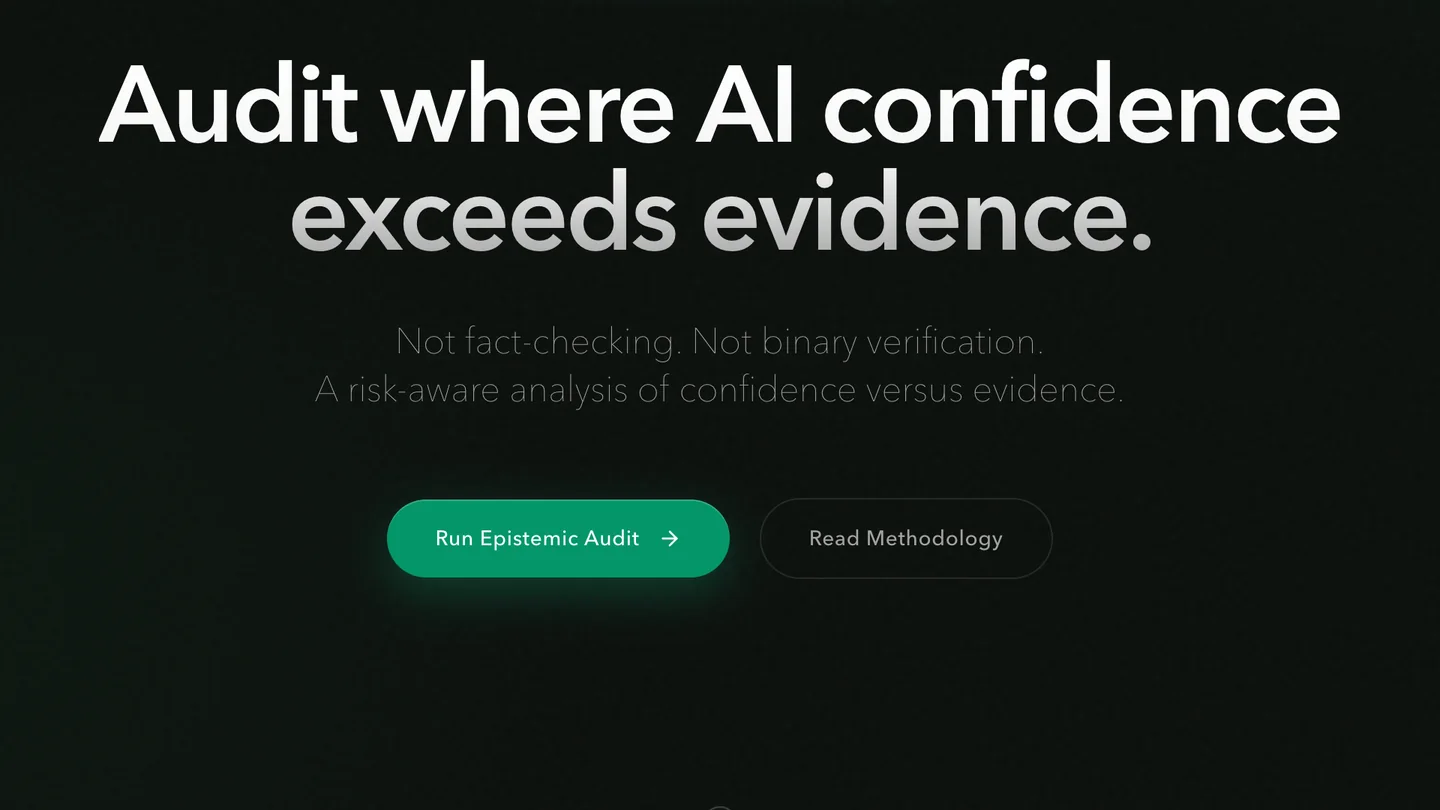
A claim-level audit service that separates supported, refuted, and unresolved statements in generated text.
Designed and built the pipeline and interface; sole contributor to the public repository. No production adoption is claimed.
Research prototype, 2026
Python · FastAPI · Next.js · Evidence retrieval · JSONL evaluation logs
What needed to work
A single confidence score hides which statements in a long answer are grounded, contradicted, or still unknown.
How I approached it
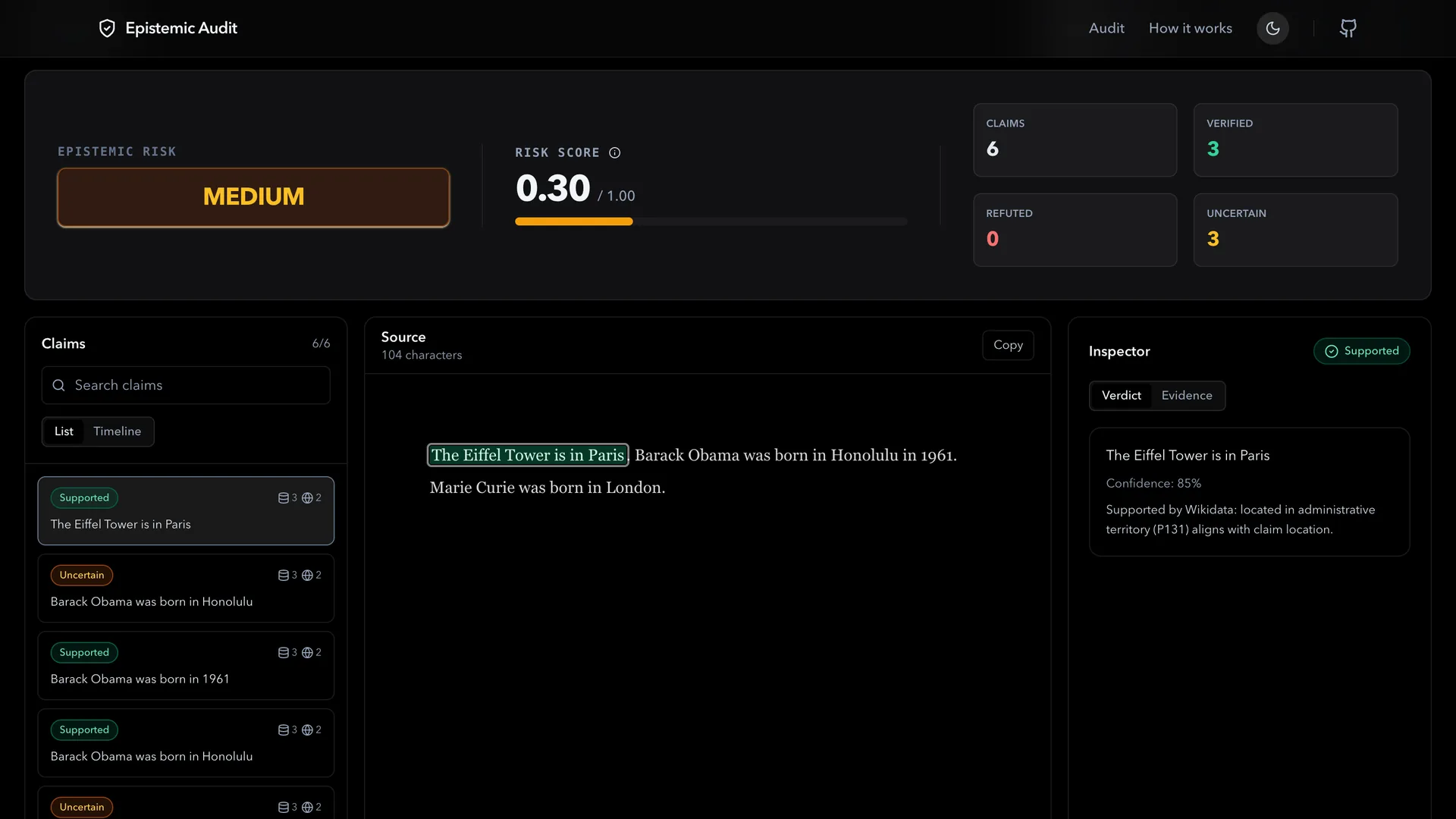
The FastAPI audit path extracts claims, links entities, retrieves evidence, verifies individual claims, and aggregates a structured risk response.
The Next.js inspection interface lets a person review the per-claim output. The repository also contains health endpoints, append-only audit logs, and an evaluation harness.
Evidence retrieval and verdicts are fallible. An uncertain result is surfaced as uncertainty rather than silently promoted to support.
A meaningful tradeoff
The risk aggregator guards against a misleading low-risk result on a small sample: refuted claims remain high risk, while unresolved small samples stay at least moderate in the implementation.
What this demonstrates
A verdict is useful only with the claim and evidence that produced it. The repository demonstrates the pipeline, but does not establish accuracy in a live customer setting.
What I would do next
Redeploy the backend with a Wikipedia client that identifies itself properly (the deployed one was being rate-limited, which left every claim uncertain), keep it warm, then publish a defined evaluation set and error analysis before making reliability claims.